
Perimenopause sleep problems: why they happen and what actually helps
Perimenopause sleep problems are common: hot flashes, night sweats, 3 AM wake-ups and mood changes. Why it happens, what helps, and when to see a doctor.
Perimenopause sleep problems are very common: about 40% to 60% of women going through the menopausal transition report poor sleep, and the most typical complaint is waking up in the night and struggling to get back to sleep. The main drivers are shifting estrogen and progesterone, hot flashes and night sweats, mood changes and a rising risk of sleep apnea. The good news is that the most effective treatments, from cognitive behavioral therapy for insomnia (CBT-I) to treating hot flashes, are well studied and widely available.
If you used to sleep through the night and now lie awake at 3 AM, feeling exhausted and a little betrayed by your own body, you are in good company. Here is what is going on, and what you can do about it.
Why perimenopause disrupts sleep
Perimenopause is the transition before your final period, often starting in your 40s and lasting several years. Hormone levels don't simply fall: they rise and dip unpredictably, and your sleep feels it.
- Estrogen and progesterone shifts. In the large SWAN study (the Study of Women's Health Across the Nation), falling estradiol (the main form of estrogen) was linked to trouble falling and staying asleep, and rising FSH, a hormone that climbs as the ovaries slow down, was linked to waking several times a night.
- Hot flashes and night sweats. These sudden waves of heat affect up to 80% of women during the transition, and in SWAN they lasted a median of 7.4 years. Women with moderate to severe hot flashes were almost three times as likely to report frequent night wakings.
- Mood. The risk of depression rises during the transition, and sleep and mood feed each other: poor sleep worsens mood, and low mood or anxiety makes sleep lighter.
- Sleep apnea. After menopause, women are 2.6 times as likely as before menopause to have at least mild sleep apnea (pauses in breathing during sleep), in a large Wisconsin study cited in a 2018 review. The loss of progesterone's protective effect on breathing may play a role.
- Life itself. The National Institute on Aging points out that these years often come with caring for parents, supporting kids and heavy work responsibilities, all on top of symptoms.
The common perimenopause sleep patterns
| Pattern | What it looks like | Common driver |
|---|---|---|
| Waking in the night | Up at 2 or 3 AM, then lying awake | Hot flashes, hormone shifts, stress |
| Night sweats | Damp sheets, kicking off covers, changing pajamas | Vasomotor symptoms (hot flashes at night) |
| Trouble falling asleep | Wired at bedtime, mind racing | Anxiety, low mood |
| Waking too early | Awake at 5 AM and can't get back down | Mood changes, body clock |
| Tired despite "enough" hours | 7 hours in bed, still exhausted | Fragmented sleep, possible sleep apnea |
According to the Sleep Medicine Clinics review, difficulty staying asleep is the most common complaint, and hot flashes tend to cause frequent awakenings, while depression is more often tied to trouble falling asleep and waking too early. In one study, around a quarter of perimenopausal women met the criteria for insomnia, and the risk rose with the severity of their hot flashes.
Interestingly, sleep-lab studies don't always find big changes in sleep structure, such as how much deep sleep you get. The real story is fragmentation: more wake-ups, more time lying awake, and nights that feel worse than the numbers suggest. And researchers now think the arrow can point both ways: the National Institute on Aging notes that waking from sleep may itself trigger some hot flashes.
Is it perimenopause insomnia?
Insomnia means regular trouble falling asleep, staying asleep or waking too early, to the point that it affects your days: fatigue, irritability, a foggy head. Perimenopause doesn't have its own separate kind of insomnia, but the transition makes insomnia more likely. The Sleep Medicine Clinics review found that the odds of sleep problems are about 1.6 times higher in perimenopause than before it.
What helps perimenopause sleep problems
1. CBT-I: the first-line treatment for insomnia
Cognitive behavioral therapy for insomnia (CBT-I) is a short, structured program that retrains the habits and thoughts keeping you awake. It is considered the first-line treatment for chronic insomnia. In a randomized trial of perimenopausal and postmenopausal women with insomnia and daily hot flashes, 8 weeks of CBT-I beat a menopause education program, and the gains lasted 6 months. The National Institute on Aging suggests looking for a therapist experienced with women in the menopausal transition.
2. Treat the hot flashes
If night sweats wake you, cooling them down is often the fastest route to better sleep.
- Hormone therapy is the most effective treatment for hot flashes, and it modestly improves sleep, mostly by relieving them. It is a decision to make with your doctor, who will weigh your age, whether you've had a hysterectomy, and your personal and family history, since hormone therapy carries risks for some women.
- Nonhormonal prescription options include fezolinetant and elinzanetant (made specifically for hot flashes), low-dose paroxetine, and medicines like gabapentin and oxybutynin used off-label, according to Cleveland Clinic. The Menopause Society's 2023 review also lists CBT and clinical hypnosis among recommended nonhormone approaches for hot flashes.
- Supplements such as black cohosh, DHEA and soy isoflavones are not proven to work, and the National Institute on Aging warns that some carry risks such as liver damage. Talk to your doctor before taking any herb.
Our guide to menopause night sweats remedies goes through the bedroom setup and each option in detail.
3. Rethink the evening glass of wine
Alcohol can make you drowsy, but as your body clears it, sleep becomes lighter and more broken, with more awakenings in the second half of the night. The National Institute on Aging puts it simply: even small amounts make it harder to stay asleep. If you drink, try stopping at least three hours before bed, and notice the difference.
4. A cooler bedroom and adjustable layers
Lower the bedroom temperature, layer your bedding so you can remove it in the night, keep a fan running and a glass of cold water nearby. These are the practical steps the National Institute on Aging suggests when hot flashes keep you up. Expert panels haven't found strong evidence that cooling reduces the number of hot flashes, but it can make each one easier to sleep through.
5. Consistency beats perfection
Go to bed and get up at the same time each day, avoid late-afternoon naps, keep screens out of the bedroom, exercise regularly but not right before bed, avoid big meals late, and keep caffeine to the morning. None of these will cure hot flashes, but together they give your body clock the strongest possible signal.
6. Be careful with sleep aids
Some women reach for melatonin or prescription sleep medicines. The National Institute on Aging notes that these may help for a short time but are not a cure for insomnia and shouldn't be used long term. Ask your doctor before starting any of them.
When to talk to a doctor
Make an appointment if:
- you have trouble sleeping most nights for several weeks, and it affects your days;
- hot flashes or night sweats wake you up regularly;
- you snore loudly, wake up gasping, or feel very sleepy during the day (possible sleep apnea, which is often missed in women);
- you feel low, anxious or not like yourself;
- you are considering hormone therapy or a nonhormonal medicine.
How tracking helps you bring facts to the appointment
"I sleep badly" is easy to brush off. Something like "I wake up around 3 AM most nights, mostly on my warmer nights" is not. A few weeks of data turns a vague complaint into a clear pattern your doctor can act on, and lets you both see whether a treatment is working.
If you have an Apple Watch, it can already record your sleep stages and wake-ups in Apple Health (here is how to set it up). On Apple Watch Series 8 or later, any Apple Watch Ultra and Apple Watch SE 3, it also records nightly changes in wrist temperature against your own baseline, which takes about 5 nights to set up.
Sleepwrist turns that data into something you can read in a few seconds. It marks every wake-up on an arc of your night, finds the hour you wake up most, and on watches that record wrist temperature, lines your wake-ups up with your warmer nights (on other models, with your heart rate and sleep stages). Its "Your body" view compares your wrist temperature and sleeping heart rate with your own usual nights, in words like "Just right" or "A bit warm."
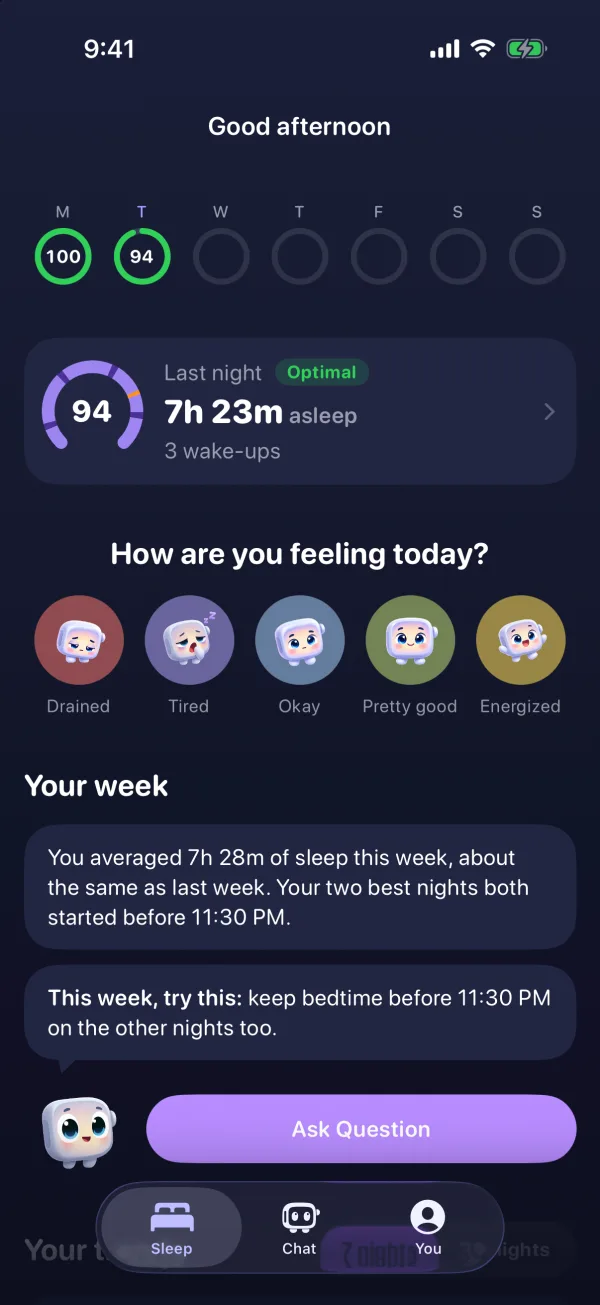
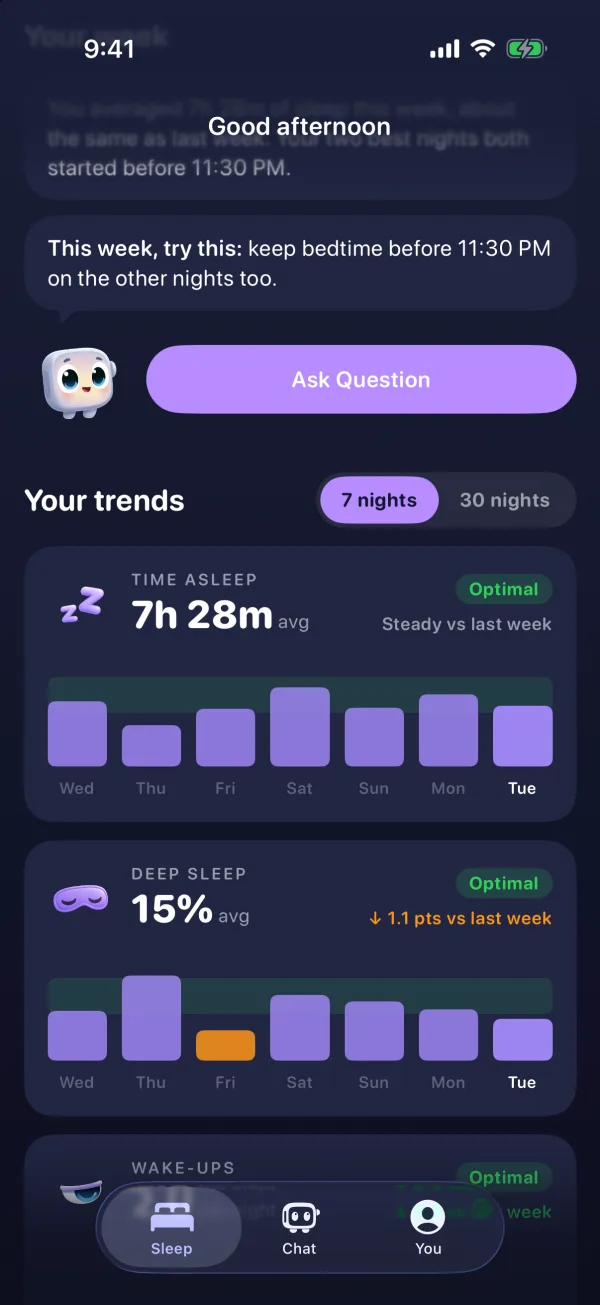
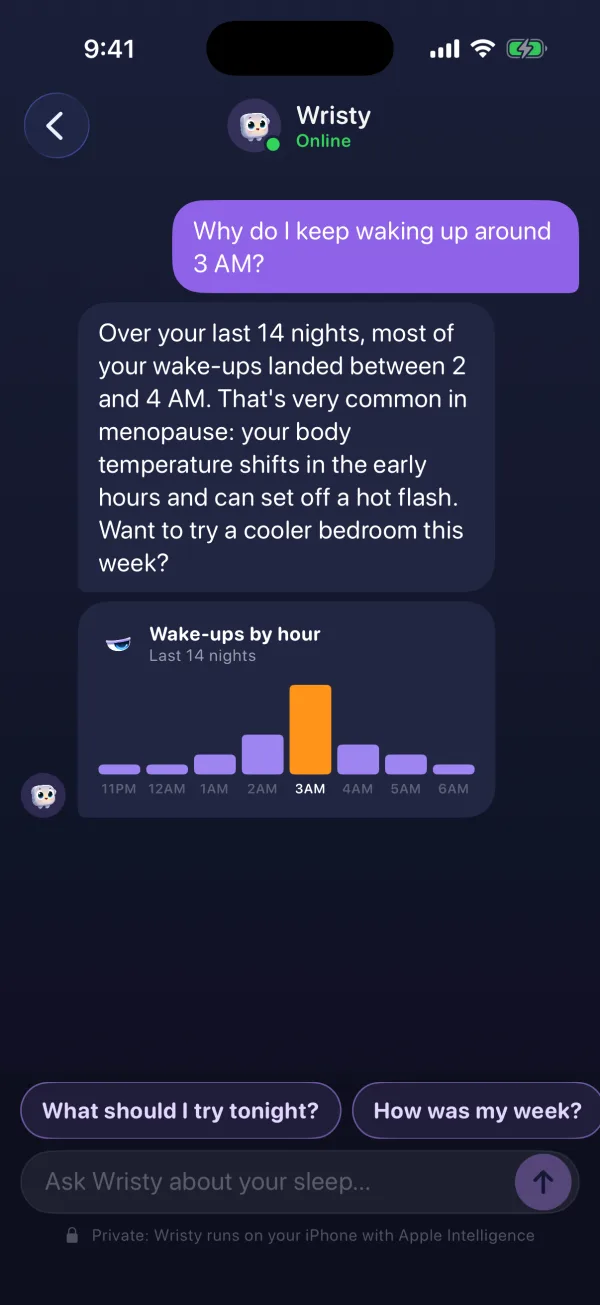
Each morning, Wristy, the app's friendly watch mascot, explains your night in plain words and suggests one thing to try tonight. You can tag your evenings (alcohol, late caffeine, screen time, medication), log how rested you feel, and on iPhone 15 Pro or newer, ask Wristy questions about your own nights in a private chat that runs on the device. Your health data is analyzed on your iPhone and never sold or shared. Sleepwrist is a wellness app, not a medical device: it doesn't diagnose insomnia or sleep apnea, but it gives you facts to bring to the person who can.
Frequently asked questions
Can perimenopause cause insomnia?
Yes, it makes insomnia more likely. Hormone shifts, hot flashes, night sweats and mood changes all disrupt sleep, and in one study about a quarter of perimenopausal women met the criteria for insomnia. CBT-I works well for insomnia during this stage.
How long do perimenopause sleep problems last?
It varies a lot. Hot flashes, a major cause of night waking, lasted a median of 7.4 years in the SWAN study, and some women have them for more than a decade. Treating the cause can improve sleep long before the transition ends.
Why do I wake up at 3 AM in perimenopause?
By the early morning hours your deep sleep is mostly done and you are in lighter sleep, so a hot flash, a racing mind or a full bladder can easily wake you. Read why you wake up at 3 AM for the full picture.
Does hormone therapy help perimenopause sleep?
Hormone therapy is the most effective treatment for hot flashes, and it modestly improves sleep, especially when hot flashes are what's waking you. It isn't right for everyone, so it's a conversation to have with your doctor.
Does melatonin help perimenopause insomnia?
Some women try it, but the National Institute on Aging notes that sleep aids like melatonin are not a cure for insomnia and shouldn't be used long term. CBT-I is the recommended first step for ongoing insomnia.
Can perimenopause cause sleep apnea?
Sleep apnea becomes more common after menopause, possibly because of hormone changes and shifts in body fat. In women it often looks like insomnia or fatigue rather than loud snoring, so mention any daytime sleepiness to your doctor.
Can my Apple Watch tell if my sleep problems are from perimenopause?
No watch can diagnose perimenopause. It can show patterns, such as more wake-ups on nights when your wrist temperature runs warmer, that are useful to share with your doctor.
Sources
- Baker et al. (2018), Sleep and Sleep Disorders in the Menopausal Transition, Sleep Medicine Clinics
- National Institute on Aging, Sleep Problems and Menopause: What Can I Do?
- National Institute on Aging, Hot Flashes: What Can I Do?
- Cleveland Clinic, Hot Flashes: Triggers, How Long They Last and Treatments
- The Menopause Society, 2023 Nonhormone Therapy Position Statement (press release)
- Sleep Foundation, Alcohol and Sleep
- Apple Support, Track your nightly wrist temperature changes with Apple Watch
This article is for general information and does not replace advice from your doctor. If your sleep problems last more than a few weeks or come with other symptoms, talk to a healthcare professional.